Showing posts with label MOMA. Show all posts

December 13, 2013

FOR THOUGHT: TWO SIDES

Two interesting sides to an issue I wrote about over a year ago in "A visit to the MOMA."

"How Instagram alters your Memory" by Emily Badger examines a person's ability to retain information -- comparing the use of photography vs. observation. Specifically addresses this issue in museums.
Despite the added time or attention required to angle the camera and adjust the lens so as to capture the best shot of the object in its entirety, the act of photographing the object appears to enable people to dismiss the object from memory, thereby relying on the external devise of the camera to “remember” for them.
I might agree with this study. Here I photographed a piece and embarrassingly retained nothing about it. BUT I WAS THERE.  Taking notes can be a form of "museum memory cheating," but I was so excited by the crack-like rush of excitement from my photographic cleverness that I never looked at the label.

 "To Instagram or Not to Instagram" by Jillian Steinhauer supports museum photography and addresses the Art Selfie.
...people are often taking pictures because they’re excited about art. They came because they wanted to see it with their own eyes. And they’re using their cameras and smartphones as a form of interaction — we live, after all, in the age of mechanical reproduction, not the age of aura. Did we lose something in the exchange? Probably. But that doesn’t mean we should throw up our hands completely. The way we understand and process art has changed — you can take it home with you, blow it up on your computer screen, remix it in Photoshop, Snapchat it to your friends — in part because the way we understand nearly all cultural production has changed.
Other reads:

The original study on Museum Photography in Psychological Science
"The Overexposed Museum" by Eric Gibson

June 4, 2012

NEW YORK PART I

As I've said before, I don't take pictures in museums.  When I walked around New York, I carried a notebook to jot down titles and artist names of things I liked. Here is the first batch. These are images I saw at the MOMA and the Cloisters. For whatever reason, they jumped out at me more than other things did.

I wanted to remember them, so here they are!
Camel fresco from the Closters

playing cards

playing cards, detail


Three apes assembling a trestle table

Andrea Zittel, Something from nothing with very little effort involved

Nancy Grossman

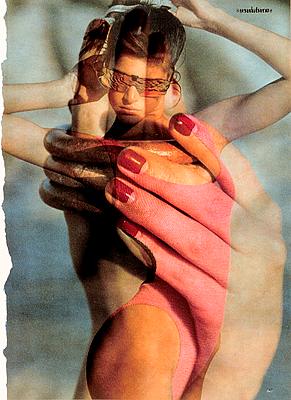
Robert Heinecken, Recto Verso


 Heinecken, Recto Verso

 Heinecken, Recto Verso

 Heinecken, Recto Verso

Andre Racz, Flesh Fly

Edward Steichen, Maypole, Empire State Building

Tauba Auerbach, RGB

Zarina, Home is a Foreign Place

Zarina, Home is a Foreign Place

Zarina, Home is a Foreign Place

Stay tuned for the Met.

April 13, 2012

a visit to the MOMA

I am going to New York in a month. To say that I'm excited would be a bit of an understatement. The last time I was there, the 2010 Biennial was on display. Now I can see the 2012. Like any dedicated, nerdy art historian, I've made a exhaustive list of every museum I would like to go to. (This also includes operating hours and days they are closed...) Then, there are the sub-lists -- all of the current exhibitions, traveling and permanent collection, that I want to see. I'm crossing my fingers that I'll get through most of the list. There is an exhibition at the Met  that struck me as interesting -- it's not my number one, but it got me thinking about a few things. Spies in the House of Art: photography, film, video is about art that uses/features art in museums in the final product. Images in a museum showing/reacting to images in a museum? I tossed this  into my brain and begin to turn it over a bit. It mixed with a couple of other things I've been mulling over --

TtV


 Yashica D imagery popping up in my current watercolors


other viewfinder designs


visiting museums in New York, VISITINGMUSEUMSINNEWYORK.

Then. Then, I got a nagging need to make these.

Visit to the MOMA, Irving Penn

Visit to the MOMA, Henri Rousseau

Visit to the MOMA, Pablo Picasso

This series was prompted by something I see frequently on museum visits -- the "trophy hunter."  This person takes digital pictures of the "greatest hits" as he travels through the museum. I've always been a little put off by photography in a museum setting -- mainly because it can be damaging to the work and disruptive to other patrons. With low levels of light designed to protect art and a "no flash photography" policy, it can be near impossible to snap a digital picture of good quality in galleries. Why bother even trying? I have to question if these people are actually looking at the art, or are just finding it, taking a picture, and crossing it off some sort of mental list.  I have created imagined viewfinders and placed them over images of notable pieces from the MOMA collection. This is what I suppose people see when they spend the majority of a museum visit with a camera separating their eyes from the actual work.

These images have been cut from an art history textbook published in the mid 1980s, and have been scanned into the computer to achieve the "off" colors that photographing in low light (and then attempting to retouch the images) can result in. Each image is roughly the same size, removing any important or remarkable differences in scale -- much in the same way digital images viewed on a computer screen would be.  See the rest of my Visit to the MOMA images here.